

Circular Design at Work: How Sustainable Thinking Shapes Future Offices
Sustainability is no longer an afterthought in workplace design — it’s becoming a core operational strategy. As companies across the region rethink how their offices support performance, culture, and long-term growth, circular design has emerged as a leading approach for building sustainable, adaptable, and economically efficient work environments.
Circular design shifts the conversation from “designing for today” to “designing for longevity.” It reduces waste, lowers cost over time, supports hybrid flexibility, and aligns with corporate sustainability goals. For organizations seeking high-performance interiors that evolve with their teams, circularity is quickly becoming the new standard.
At Comet, we see circular design not as a trend, but as a framework that enables smarter decisions — decisions that prioritize durability, flexibility, wellbeing, and environmental responsibility.
What Circular Design Really Means in Corporate Interiors
Circular design replaces the traditional linear approach of use → discard with a smarter, more sustainable cycle:
design → use → maintain → adapt → reuse → regenerate.
In practical terms, this means:
- Choosing materials that last longer and can be renewed
- Designing elements that can be disassembled and reused
- Reducing construction waste by planning modular systems
- Prioritizing flexibility to extend the life of the workspace
- Creating healthier environments with low-impact materials
This approach benefits both the business and the environment — a dual impact that is driving its rapid adoption across corporate, retail, and banking sectors.
Why Circular Design Has Become a Business Priority
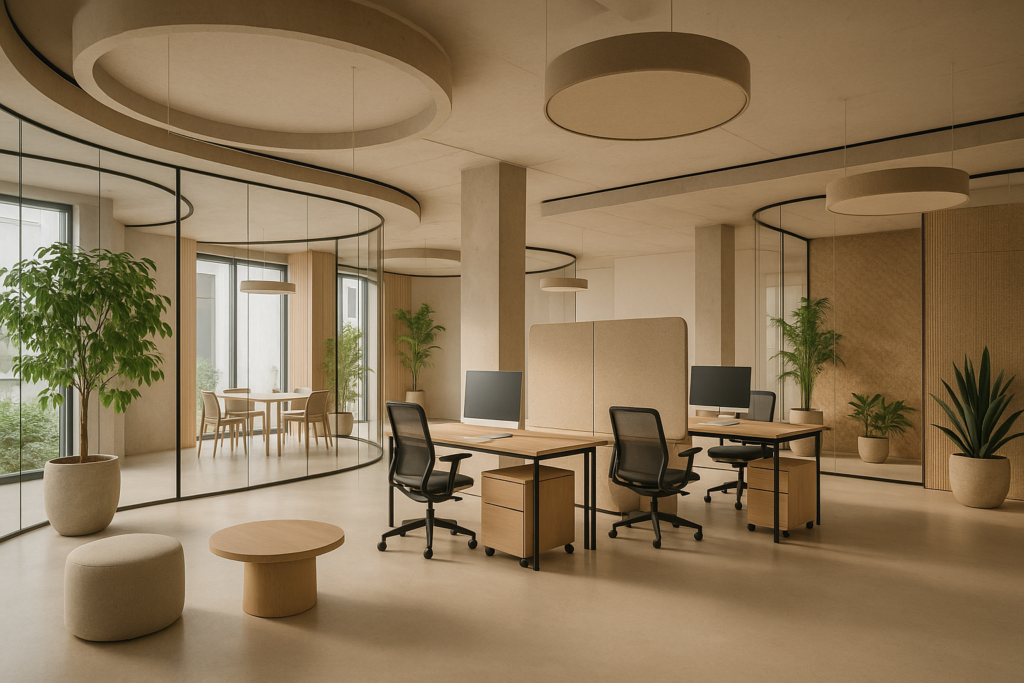
Corporate leaders are increasingly prioritizing circularity because it delivers measurable value.
1. Cost Efficiency Over Time
Circular materials and modular systems reduce ongoing renovation and maintenance costs. Instead of replacing entire components, businesses can repair, renew, or reconfigure them.
2. Better Support for Hybrid Work
Dynamic teams need spaces that can evolve. Circular design makes it possible to update office layouts without demolition or downtime.
3. Compliance With Global ESG Standards
More companies in the region are adopting sustainability reporting frameworks. Circular interiors contribute directly to measurable environmental goals.
4. Healthier, More Productive Environments
Low-VOC paints, biobased materials, and natural finishes improve indoor air quality — directly supporting employee wellbeing.
Circular design isn’t just about being eco-friendly. It’s a smarter operational strategy that strengthens long-term performance.
1. Designing Workspaces That Adapt Instead of Expire
One of the biggest advantages of circular design is its focus on adaptability. Instead of locking the office into a rigid layout, it creates a system that can transform with the business.
Modular Partitions and Acoustic Systems
Movable walls and acoustic panels allow teams to reshape their environment based on workload, team size, or mode of work — with minimal disruption.
Flexible Lighting and Power Infrastructure
Track lighting, raised flooring, and mobile power modules enable layout changes without costly electrical work.
Convertible Zones
Quiet areas can become meeting zones; lounges can shift into collaborative hubs. This adaptability extends the lifetime of the workspace.
In an era of rapid change, offices designed for evolution stay relevant longer — reducing material waste and renovation costs.
2. Choosing Materials With a Life Beyond the Project
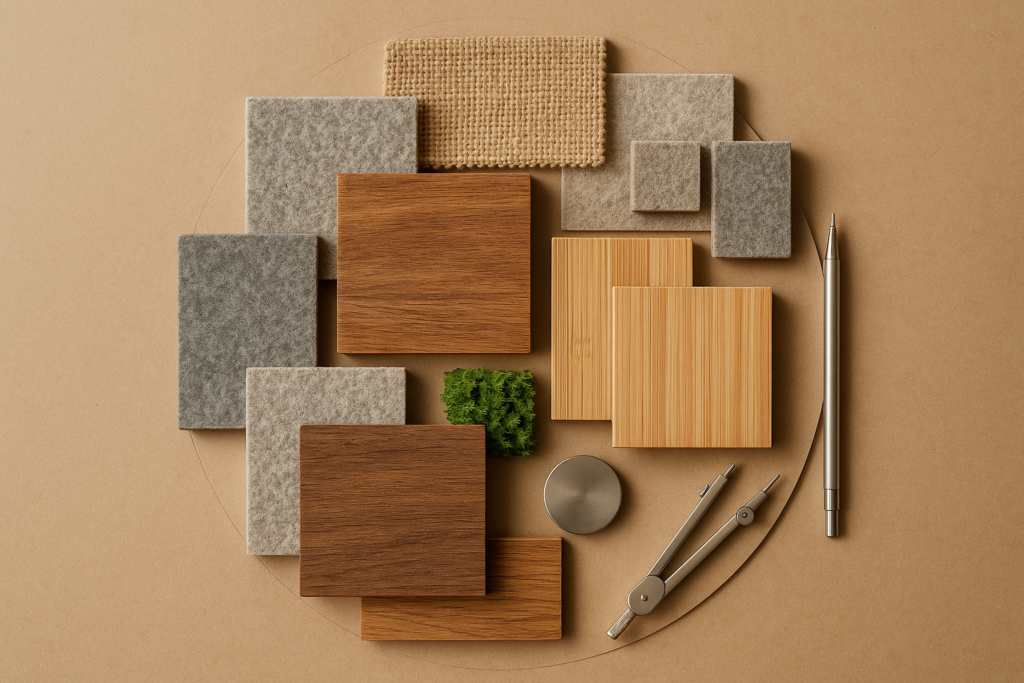
Circularity is not only about reusing materials — it’s about selecting the right ones from the start.
High-Lifecycle Finishes
Surfaces engineered for durability (compact laminates, composite woods, recycled metals) minimize long-term replacement needs.
Repairability Over Replacement
Furniture that can be reupholstered, floors that can be refinished, and modular systems that can be upgraded reduce waste dramatically.
Biophilic and Biobased Options
Moss walls, cork, bamboo, and natural composites contribute to employees’ wellbeing and offer a lower environmental footprint.
Choosing materials based on lifecycle — instead of aesthetics alone — reshapes the sustainability performance of the entire project.
3. Reducing Waste Through Design Intelligence
Circular thinking begins long before construction starts.
At Comet, early-stage planning incorporates waste reduction strategies, including:
Designing for Disassembly
Elements are planned so they can be removed and reused without damage.
Digital Planning for Precision
Advanced modeling reduces on-site errors, eliminating unnecessary material waste.
Right-Sizing Material Specifications
Over-specification leads to leftover waste; circular design optimizes material quantities.
Partnering With Circular-Friendly Suppliers
From recycled carpets to cradle-to-cradle certified materials, supplier selection plays a critical role.
This proactive approach ensures that sustainability is not an afterthought — it’s built into the foundation of the project.
4. How Circularity Enhances Workplace Performance
Sustainable design isn’t only about the planet — it’s about people. Circular interiors directly contribute to a better work experience.
Healthier Materials = Healthier Teams
Non-toxic, low-emission materials reduce fatigue and improve air quality.
Biophilic Elements = Natural Stress Reduction
Greenery, textured natural materials, and daylight-friendly layouts increase focus and wellbeing.
Adaptable Work Zones = Better Collaboration
Multi-use spaces allow teams to switch between focus, teamwork, and social engagement seamlessly.
Acoustic Control = Higher Productivity
Recycled acoustic panels — a staple of circular design — reduce noise without permanent construction.
Circular spaces are not only environmentally conscious; they are human-centered.
5. A Financially Smarter Interior Strategy
A misconception about sustainability is that it costs more. In reality, circular design delivers long-term financial value:
Longer Material Lifecycles
A surface that lasts 10–12 years instead of 4–5 generates significant savings.
Lower Renovation Costs
Modular systems allow businesses to update their space without dismantling it.
Reduced Operational Downtime
Faster reconfiguration means less disruption to daily operations.
Boosted Employee Retention & Engagement
A healthier, well-designed workspace improves workplace satisfaction — which has a measurable impact on retention and performance.
Circular design is not an expense; it’s an investment in long-term efficiency.
6. Circular Interiors as a Brand Statement
Companies today increasingly use their physical spaces to demonstrate their values. A circular workspace communicates:
- Innovation
- Responsibility
- Long-term thinking
- Environmental awareness
- Employee-first culture
From client impressions to internal culture, circular design becomes part of the organization’s identity.
How Comet Brings Circular Principles Into Corporate Spaces
Circular design aligns perfectly with our vision at Comet — creating intelligent, future-ready spaces that perform beyond aesthetics.
Our approach integrates:
- Strategic workplace planning
- Lifecycle-focused material selection
- Modular and flexible systems
- Wellness-driven biophilic features
- Long-term operational efficiency
- ESG-conscious design principles
The result is an office that is smarter, healthier, more resilient, and built for the future.
Ready to Build a More Sustainable Workspace?
Circular design allows companies to reduce waste, increase durability, improve wellbeing, and future-proof their office environment.
If your organization is exploring sustainable interior solutions:
📩 Visit our website or contact our team to start your next project with Comet Architects + Interiors.