
Office Layout Debt: The Hidden Productivity Killer in Workplace Design
In most organizations, productivity challenges are addressed through hiring, tools, or process improvements. When performance drops, companies tend to look outward—at skills, systems, or strategy.
But one of the most consistent sources of inefficiency is often sitting in plain sight:
The office layout itself.
Workplace design is rarely questioned once a space is built. It becomes a fixed environment that teams are expected to adapt to, regardless of how their work evolves. Over time, this creates a silent but compounding problem—one that doesn’t show up in reports immediately, but is felt in daily operations.
This is what we call layout debt.
Layout Debt: A Problem That Builds Over Time
Layout debt does not happen overnight. It accumulates gradually as organizations grow and change.
A company expands its teams, but keeps the same seating arrangement.
New departments are introduced, but are placed wherever space is available.
Meeting rooms are added reactively, not strategically.
On the surface, the office continues to function. People find workarounds. Teams adjust. But underneath, inefficiencies begin to stack.
Employees walk longer distances to coordinate with colleagues.
Quick discussions turn into scheduled meetings because proximity is lost.
Focus becomes harder as noise increases and boundaries blur.
Individually, these issues seem minor. Collectively, they create measurable friction that slows the entire organization down.
The Real Cost of Poor Office Layout Design
Layout debt is not just a design issue.
It is a business performance issue.
Common Symptoms:
- Employees walking long distances between teams
- Overused meeting rooms and constant booking conflicts
- High noise levels in open areas
- Underutilized spaces
- Frequent interruptions and context switching
Business Impact:
- -10% to -20% productivity loss
- Increased employee frustration and fatigue
- Slower decision-making
- Reduced collaboration efficiency
In large organizations, these inefficiencies compound daily—creating significant operational cost over time.
How Office Layout Impacts Productivity (With Measurable Outcomes)
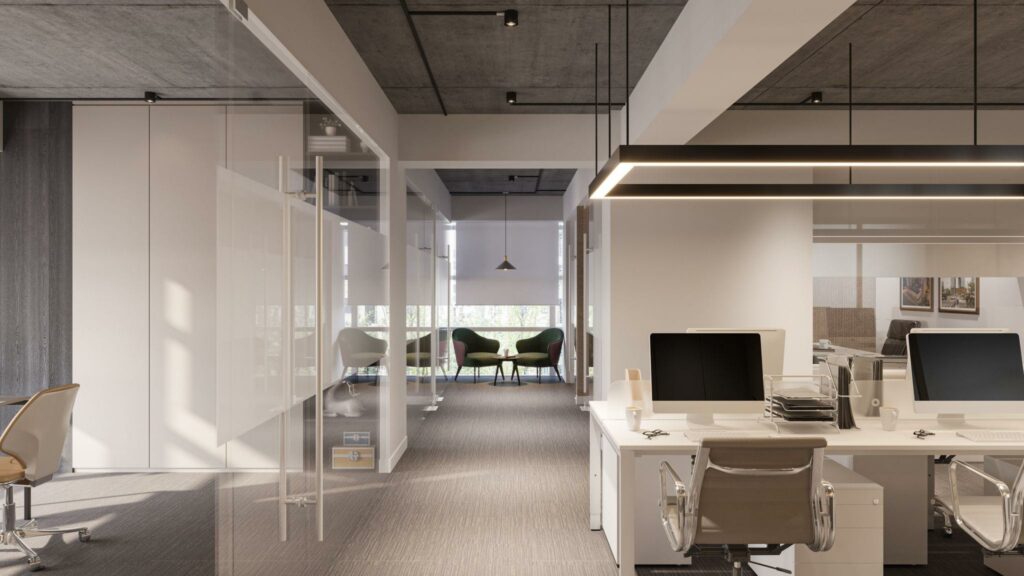
A well-designed workplace can reverse layout debt and improve performance across key metrics.
1. Focus Time
Strategic zoning reduces distractions:
- +15% to +25% increase in deep work time
2. Team Efficiency
Better adjacency improves coordination:
- +10% to +18% faster task completion
3. Space Utilization
Smarter planning reduces wasted areas:
- +20% improvement in space efficiency
4. Employee Satisfaction
Better environments support wellbeing:
- +12% to +18% increase in staff satisfaction
The Root Cause: Offices Designed for the Past
Why Most Offices Are No Longer Fit for Purpose
The core issue is that many offices today are still designed based on outdated assumptions about how work happens.
Traditional workplace planning assumed that:
- Employees work primarily at desks
- Collaboration happens in meeting rooms
- Open spaces naturally encourage interaction
However, the reality of modern work is very different.
Work is now hybrid, dynamic, and task-based. Employees shift between focused work, collaboration, virtual meetings, and informal discussions throughout the day. A single type of space cannot support all these modes effectively.
When an office layout does not reflect these patterns, employees are forced to adapt constantly—switching environments, searching for space, or compromising on how they work. This continuous adjustment is where productivity is lost.
The Key Drivers of Layout Debt
1. Poor Adjacency Planning
Teams that work closely are placed far apart.
This leads to:
- Increased movement
- Communication delays
- Reduced efficiency
Fix:
Group teams based on workflow, not hierarchy.
2. Over-Reliance on Open Spaces
Open offices without zoning create:
- Constant distractions
- Noise Problems
- Lack of privacy
Fix:
Introduce acoustic zoning and defined work areas.
3. Meeting Room Imbalance
Too few or poorly sized meeting rooms result in:
- Booking conflicts
- Informal meetings disrupting work areas
Fix:
Diversify meeting spaces:
- Small focus rooms
- Collaboration zones
- Flexible meeting areas
4. Dead or Underused Spaces
Large areas often go unused because:
- They serve no clear purpose
- They are poorly located
Fix:
Reassign spaces based on real usage data.
5. Lack of Flexibility
Rigid layouts cannot adapt to growth or change.
This leads to:
- Frequent redesigns
- Costly relocations
Fix:
Adopt modular and adaptable workspace planning.
From Layout Debt to Layout Strategy
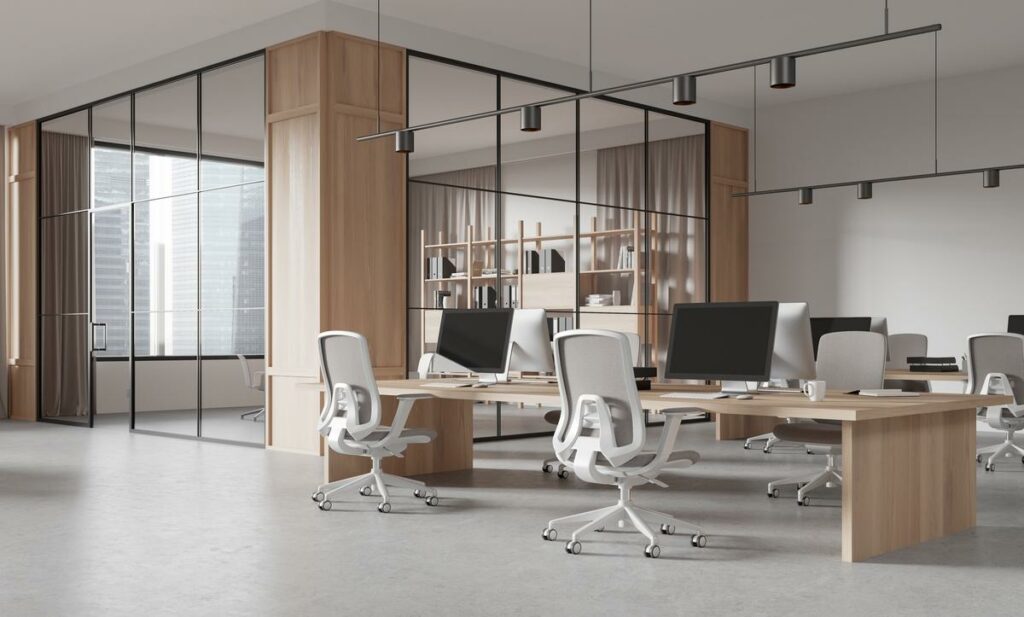
Eliminating layout debt requires a shift from reactive design to strategic planning.
1. Define Work Modes
Understand how people actually work:
- Focus work
- Collaboration
- Meetings
- Informal interaction
Design spaces around these modes.
2. Optimize Adjacency
Map team relationships and workflows.
Place:
- High-interaction teams closer
- Independent roles in quieter zones
3. Introduce Zoning
Create clear spatial layers:
- Quiet zones
- Collaboration zones
- Social areas
This reduces friction and improves flow.
4. Measure Performance
Track:
- Space utilization
- Meeting room usage
- Employee feedback
Use data to refine layout continuously.
5. Design for Growth
Ensure the office can adapt without major disruption.
This includes:
- Flexible furniture
- Expandable layouts
- Scalable infrastructure
The Role of Flexibility in Future Workplaces
One of the key lessons from layout debt is that rigidity leads to inefficiency.
Organizations that design static environments often find themselves redesigning or relocating within a few years. In contrast, workplaces that incorporate flexibility—through modular layouts, adaptable furniture, and scalable infrastructure—can evolve without major disruption.
This is particularly important for growing companies, where team sizes and structures change frequently. A flexible layout allows the office to absorb these changes without compromising performance.
Why This Matters for Corporate Offices in Egypt
In Egypt’s corporate landscape, many organizations are expanding rapidly while also adapting to hybrid work models. At the same time, real estate costs continue to rise, increasing the pressure to maximize the value of every square meter.
Under these conditions, layout debt becomes more than an inconvenience—it becomes a financial issue.
An inefficient office does not just affect productivity; it increases operational costs, reduces employee satisfaction, and limits the organization’s ability to scale effectively.
By contrast, a well-planned workplace can deliver higher output without increasing space, support employee retention, and improve overall business performance.
Layout Is Not Static — It’s a System
High-performing organizations treat workplace layout as:
- A living system
- A measurable asset
- A continuous improvement process
Not a one-time design project.
Conclusion: Fix the Layout, Unlock the Performance
Layout debt is rarely visible in financial reports, but its effects are felt across every level of an organization.
It slows teams down, reduces focus, and creates daily friction that accumulates over time.
The solution is not more space or more resources. It is better alignment between how people work and how space supports that work.
When office layout is approached strategically, it becomes a powerful lever for improving productivity, efficiency, and employee experience.
At Comet Architects + Interiors, we design workplaces that perform.
We help organizations:
- Eliminate layout inefficiencies
- Improve team productivity
- Optimize space utilization
- Create adaptable, future-ready offices
Visit cometarch.com to explore our approach to workplace layout and office performance.
Contact us to discover how how strategic space planning can improve productivity, efficiency, and team performance.