
The Deep Focus Blueprint: Spatial Strategies That Boost Performance
In today’s fast-moving workplaces, focus has become a rare resource. Teams are expected to solve complex problems, generate ideas, and collaborate — all while navigating constant digital and physical distractions. In this environment, deep focus isn’t optional; it’s a performance multiplier.
Yet many offices still rely on open-plan layouts that encourage movement but fail to support concentration. As organizations shift toward hybrid work models and higher expectations for productivity, the ability to design spaces that protect cognitive performance has become a strategic priority.
At Comet Architects + Interiors, we see focus as a design outcome — not an accident. The way we shape space directly influences how people think, process information, and perform their best work. This is where intentional design becomes a business tool.
Why Deep Focus Matters More Than Ever
Research shows that even a small interruption — a notification, a conversation nearby, a visual distraction — can cost up to 23 minutes of lost concentration before the brain fully refocuses. When multiplied across teams and work hours, focus leakage becomes a significant drain on both performance and wellbeing.
Organizations that invest in environments that protect focus benefit from:
- Higher-quality output
- Faster decision-making
- Reduced burnout
- Stronger employee satisfaction
- Better talent retention
Deep work is not a trend — it’s essential to a high-performance culture.
The Barriers to Focus in Modern Workspaces
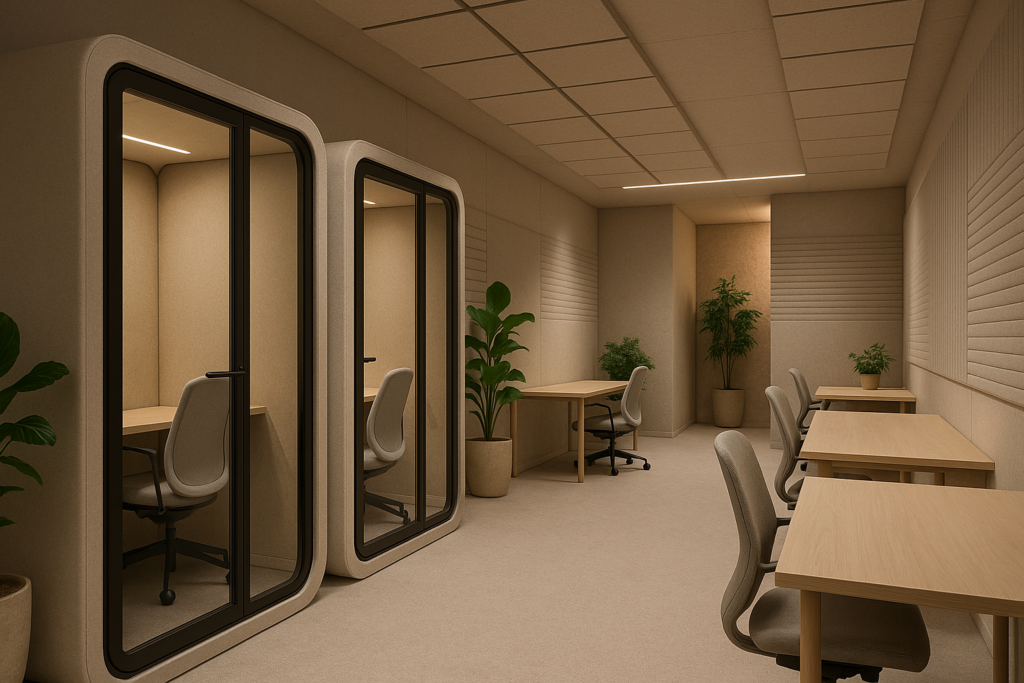
Open layouts were designed to increase collaboration, but they also introduced obstacles:
• Noise and visual movement
Unpredictable sound and constant activity overstimulate the brain.
• Lack of spatial boundaries
Without clear zones, people struggle to match tasks with environments.
• Over-lit or poorly lit spaces
Lighting impacts cognitive load, fatigue, and mood.
• Uniform furniture layouts
One-size-fits-all environments don’t account for different work modes.
• Acoustic fatigue
Reverberation and speech noise reduce mental endurance.
A focus-friendly workspace must correct these barriers — without compromising collaboration, culture, or flow.
Designing for Cognitive Performance: The Key Principles
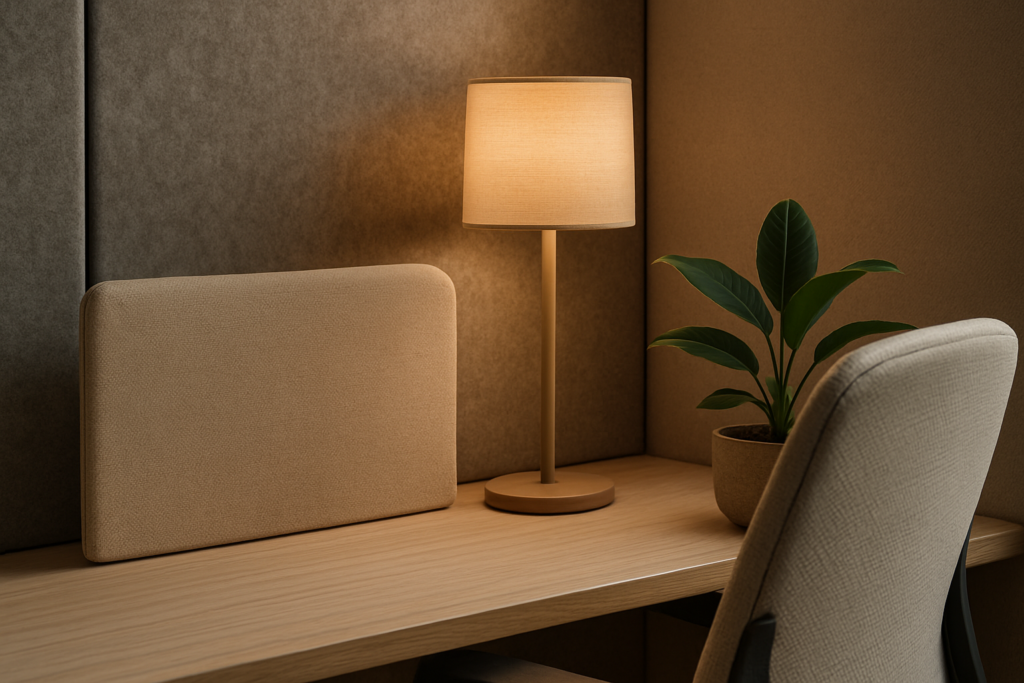
Protecting focus begins with intentional, research-driven space planning. Below are the core design principles Comet uses to build environments that strengthen thinking, decision-making, and problem-solving.
1. Zoning: Separating High-Energy and Low-Energy Areas
The most effective workplaces differentiate collaboration zones from deep-work zones. This isn’t about creating more rooms — it’s about aligning energy levels with work modes.
Deep-focus zones include:
- Individual pods
- Quiet corridors
- Library-style tables
- Enclosed micro-offices
- Phone booths
High-energy zones include:
- Brainstorm lounges
- Huddle spaces
- Collaborative benches
- Social intersections
When done well, zoning reduces noise contamination and gives teams intuitive spaces for different tasks.
2. Acoustic Intelligence: Designing for a Quiet Mind
Noise is one of the most subtle — and damaging — obstacles to focus. Controlling it requires strategic layering, not just adding panels.
Effective acoustic design includes:
- Sound-absorbing ceilings
- Acoustic wall treatments
- Carpet tiles with high NRC ratings
- Soft furnishings to reduce echo
- Enclosures for printers and high-noise equipment
- Sound-masking technology
At Comet, we design acoustics as a system, ensuring every material, surface, and layout contributes to cognitive clarity.
3. Lighting That Supports Mental Endurance
Lighting is directly linked to focus, eye strain, and circadian rhythm. The goal is balanced illumination that supports both detail-oriented tasks and long-duration work.
Focus-supportive lighting includes:
- Adjustable task lighting
- Daylight-oriented color temperatures (4000–5000K)
- Controlled glare through diffusers and baffles
- Light zoning that adapts to the user
Natural light, when properly managed, is one of the most powerful tools for mental clarity.
4. Furniture That Encourages Deep Work
Ergonomics isn’t just about posture — it influences how long someone can remain focused without discomfort or distraction.
Focus-optimized furniture includes:
- High-back privacy chairs for sensory reduction
- Height-adjustable desks for task variation
- Curved or semi-enclosed workstations
- Non-distracting monochromatic palettes
- Soft-edge surfaces that reduce visual noise
When furniture reduces cognitive load, deep work becomes more accessible.
5. Visual Quietness: Reducing Mental Clutter
Cluttered or overstimulating environments exhaust the brain. Minimal, clean lines help create a sense of clarity and control.
Strategies include:
- Neutral base palettes
- Concealed storage systems
- Low-contrast movement zones
- Controlled material diversity
- Organized, cable-free workstations
Visual calm supports mental calm.
6. Biophilic Elements That Restore Cognitive Energy
Nature-based design has been proven to reduce stress, improve memory, and increase focus. Integrating natural cues creates restorative micro-environments.
Biophilic elements include:
- Green dividers
- Natural textures
- Indoor plants
- Soft-toned wood
- Daylight pathways
Even small biophilic touches can help teams perform better for longer periods.
7. Technology Support for Deep Work
Digital tools play an important role in maintaining concentration.
Helpful tools include:
- Smart meeting room booking systems
- Occupancy sensors that reduce disruptions
- Noise-level indicators
- Focus-mode lighting presets
Technology should empower — not interrupt — cognitive flow.
How These Principles Shift Workplace Culture
When a workspace is thoughtfully designed to support focus, the impact goes beyond productivity.
Better decision-making
Teams operate with more clarity and intention.
Higher employee satisfaction
People feel supported — not overwhelmed.
Stronger creativity
A calm mind generates stronger ideas.
Improved talent attraction
High-performing environments attract high-performing teams.
Reduced stress
Design becomes a wellbeing tool.
Deep focus is a cultural asset — and the workspace either supports it or erodes it.
How Comet Designs Workspaces That Protect Cognitive Performance
Every project we design is grounded in strategy. That means working closely with clients to understand:
- Their operational requirements
- Their team’s work modes
- Existing focus challenges
- Cultural and behavioral habits
- Future growth plans
From there, we shape environments that balance openness, structure, productivity, and wellbeing — always with a clear goal: to enable people to perform at their highest cognitive level.
This approach ensures that the workplace supports not only the work being done today, but the evolution of work for years to come.
Build a Workspace That Protects Focus — and Elevates Performance
Cognitive performance should be a design priority, not a byproduct. By combining zoning, acoustics, lighting, biophilia, and ergonomics, organizations can create spaces that truly support deep focus — and unlock higher performance across their teams.
If your organization is ready to design a workspace that strengthens focus and drives results:
📩 Visit our website and contact our team to start your next workplace project.