
Meeting Rooms Are Overused: What Data Says About Smarter Planning
In many organizations, complaints about meeting rooms have become a routine part of workplace life. Employees struggle to find available spaces, calendars are packed with reservations, and teams often book rooms days in advance to secure a place for discussions. As offices grow and work patterns become more complex, the common assumption is that the solution lies in adding more meeting rooms.
However, workplace utilization data tells a different story.
Across a wide range of corporate environments, organizations are discovering that meeting room shortages are often symptoms of a larger planning issue rather than a simple capacity problem. While employees perceive a lack of available rooms, utilization studies frequently reveal that existing spaces are not being used in the way they were originally intended. Large conference rooms sit partially occupied, small discussions take place in oversized spaces, and meeting rooms increasingly serve functions that have little to do with meetings at all.
The result is a workplace that appears to be running out of collaboration space while simultaneously failing to use its existing resources efficiently. Understanding why this happens requires looking beyond room counts and examining how people actually work.
The Evolution of Meeting Spaces in Modern Workplaces
For decades, workplace planning followed a relatively predictable model. Employees worked primarily from assigned desks, formal meetings took place in designated conference rooms, and collaboration occurred within clearly defined organizational structures.
That model no longer reflects reality.
Today’s workplace is shaped by hybrid schedules, digital collaboration tools, project-based teams, and increasingly fluid work patterns. Employees move between focused work, virtual meetings, informal discussions, and collaborative sessions throughout the day. As a result, the role of meeting rooms has expanded far beyond traditional face-to-face meetings.
What many organizations have failed to recognize is that their meeting room inventory has often remained largely unchanged despite these behavioral shifts. Offices continue to allocate space according to outdated assumptions about how collaboration occurs, creating an imbalance between workplace design and actual usage patterns.
This mismatch explains why meeting room pressure has become so common even in offices that appear to have adequate space on paper.
What Workplace Data Reveals About Meeting Room Usage
One of the most significant developments in workplace strategy over the past decade has been the rise of utilization analytics. Organizations now have access to occupancy sensors, booking data, workplace observations, and behavioral studies that provide a much clearer picture of how spaces are used.
The findings are remarkably consistent.
Studies across corporate workplaces frequently show that up to 60% of meetings involve four participants or fewer, yet many offices continue allocating a substantial portion of their meeting inventory to larger conference rooms. At the same time, room booking systems often indicate high demand even when physical occupancy remains relatively low.
This creates a misleading picture of utilization.
A room may appear fully booked throughout the day while being actively used for only a fraction of that time. Employees reserve rooms in advance, keep bookings longer than necessary, or occupy spaces designed for large groups despite working individually or in pairs.
From a facilities perspective, the office appears to be operating at full capacity. From an employee perspective, finding a room feels nearly impossible. In reality, both observations can be true simultaneously because the issue lies not in total capacity but in how capacity is distributed.
Why Meeting Rooms Are Being Used for Non-Meeting Activities
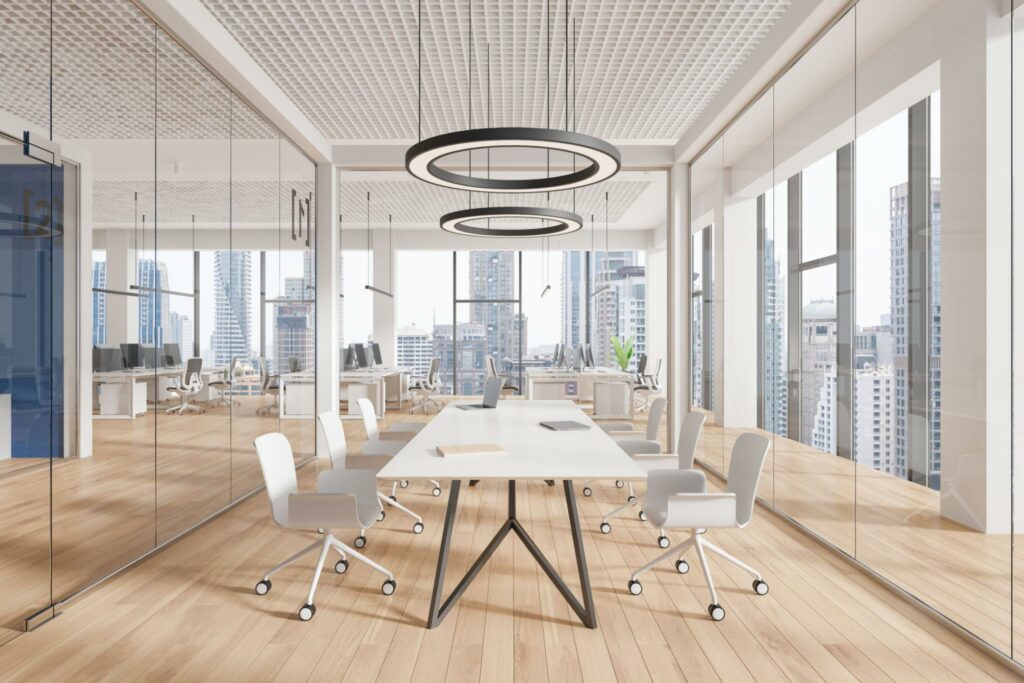
Perhaps the most revealing insight from workplace data is how frequently meeting rooms are used for purposes they were never designed to support.
In many organizations, employees book meeting rooms simply because they need privacy. A confidential phone call, a virtual client meeting, a focused work session, or a conversation that requires concentration often drives employees toward enclosed meeting spaces because alternative environments are unavailable.
This behavior highlights an important principle of workplace strategy: people will always find ways to compensate for missing space types.
- When phone booths are insufficient, meeting rooms become phone booths.
- When focus rooms are unavailable, meeting rooms become quiet workspaces.
- When project spaces do not exist, meeting rooms become temporary team hubs.
As a result, the apparent demand for meeting rooms often reflects deficiencies elsewhere in the workplace ecosystem. Adding more conference rooms may temporarily relieve pressure, but it rarely addresses the root cause of the problem.
The Business Cost of Poor Meeting Room Planning
Organizations often underestimate the operational impact of meeting room inefficiencies because the consequences are dispersed across hundreds of small daily interactions.
Employees spend time searching for available spaces. Meetings start late because suitable rooms cannot be found. Teams adjust schedules around room availability rather than business priorities. Informal discussions become formal meetings simply because appropriate collaboration spaces are lacking.
Individually, these disruptions appear minor. Collectively, they create measurable productivity losses.
Research into workplace performance suggests that employees can lose several hours each month navigating room booking conflicts, relocating meetings, or adapting to inadequate collaboration environments. In large organizations, these inefficiencies scale rapidly, affecting decision-making speed, project coordination, and overall workplace experience.
The financial impact is rarely visible in a single budget line, but it influences operational performance across the organization.
Why Smaller Spaces Often Deliver Greater Value
One of the clearest lessons from utilization studies is that workplace demand increasingly favors smaller, more flexible collaboration environments.
While large boardrooms remain necessary for specific activities, they often represent a relatively small percentage of overall workplace interactions. Most daily collaboration occurs in groups of two to four people, making oversized meeting spaces inherently inefficient for a significant portion of workplace activity.
Organizations that diversify their meeting inventory frequently experience substantial improvements in space utilization. Replacing a single large conference room with several smaller collaboration spaces can increase flexibility while reducing booking conflicts. Employees gain faster access to appropriately sized environments, and larger rooms remain available for activities that genuinely require them.
This shift is not about reducing collaboration capacity. It is about aligning spatial resources with actual behavioral patterns.
Smarter Meeting Room Planning Starts with Workplace Behavior
The most effective workplace strategies begin by understanding how people work rather than relying on traditional planning ratios.
Instead of asking how many meeting rooms an office needs, organizations should focus on understanding what types of interactions occur throughout the day. This requires evaluating meeting sizes, booking patterns, virtual collaboration requirements, focus work needs, and employee movement between different work modes.
Once these behaviors are understood, meeting room planning becomes significantly more strategic.
Organizations can introduce a broader mix of collaboration spaces, improve utilization efficiency, and create environments that support real workplace activities rather than outdated assumptions.
The objective is not to eliminate meeting rooms or reduce collaboration space. It is to create a workplace ecosystem where every space serves a clear purpose and employees can access the environments they need without unnecessary friction.
Technology Is Changing Meeting Room Requirements
Hybrid work has fundamentally reshaped meeting room design.
Today’s meetings frequently involve a combination of:
- In-person participants
- Remote attendees
- Shared digital content
This creates new planning requirements.
Meeting rooms must support:
- Video conferencing technology
- Acoustic performance
- Camera positioning
- Flexible furniture arrangements
A room that functions well for in-person meetings may perform poorly in hybrid environments. As organizations continue adopting hybrid work models, meeting room planning must evolve beyond occupancy alone.
Performance now depends on both physical and digital functionality.
What Workplace Performance Data Suggests
Organizations that adopt data-driven workplace planning often achieve measurable improvements.
Studies and workplace analytics indicate that smarter space allocation can contribute to:
- 15%–25% improvements in space utilization
- Reduced room booking conflicts
- Faster access to collaboration spaces
- Improved employee satisfaction
- Better overall workplace efficiency
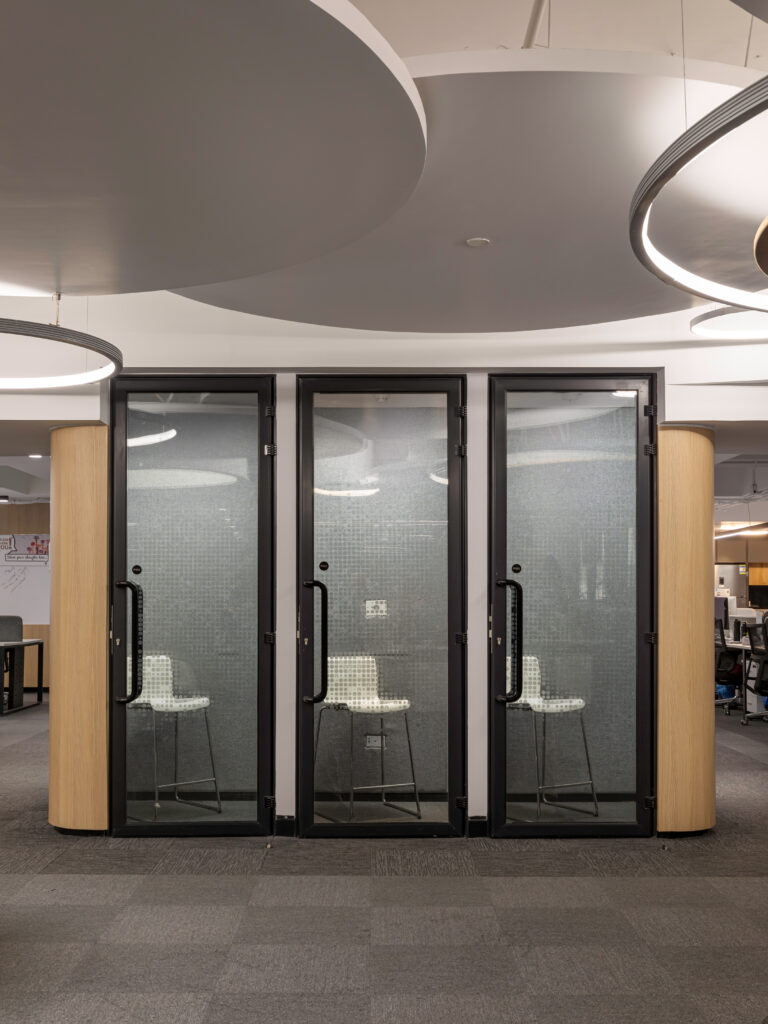
These gains rarely come from adding more square meters. They come from using existing space more intelligently.
Conclusion
The growing pressure on meeting rooms is not necessarily evidence that organizations need more of them. In many cases, it reflects a mismatch between workplace design and workplace behavior.
Utilization data consistently shows that employees use meeting rooms for a wide range of activities beyond formal meetings, often because alternative spaces are unavailable. As work patterns continue evolving, organizations must move beyond traditional room allocation formulas and adopt a more data-driven approach to workplace planning.
By understanding how people collaborate, communicate, and focus throughout the day, businesses can create more balanced environments that improve space utilization, reduce friction, and support higher levels of workplace performance.
Ultimately, smarter meeting room planning is not about increasing capacity. It is about ensuring that workplace design reflects how employees actually work.
At Comet Architects + Interiors, we help organizations align workplace design with real employee behavior through data-driven planning and performance-focused workplace strategies.
Visit cometarch.com to explore how smarter workplace planning can improve collaboration, utilization, and employee experience
or connect with our team to evaluate how your office is actually performing.