
How Store Circulation Design Impacts Dwell Time and Basket Size
Most retail brands focus heavily on products, pricing, and marketing when trying to improve performance.
But one of the strongest influences on customer behavior is often overlooked:
How people physically move through the store.
The reality is simple: customers do not experience retail spaces statically. They experience them through movement.
Every turn, pause, pathway, and transition affects:
- What customers see
- How long they stay
- What they interact with
- And ultimately, what they buy
This is where store circulation design becomes critical.
Far beyond layout aesthetics, circulation design directly shapes dwell time and basket size—two of the most important indicators of retail performance.
What Is Store Circulation Design?
Store circulation design refers to how movement is organized and guided throughout a retail environment.
It determines:
- Entry experience
- Customer pathways
- Visibility across departments
- Speed of movement
- Interaction with products
Good circulation feels effortless. Customers naturally explore the space without consciously thinking about direction.
Poor circulation creates friction:
- Congested zones
- Dead areas
- Abrupt movement interruptions
- Missed product exposure
And in retail, every interruption affects performance.
Why Customer Movement Is a Revenue Variable
Retail spaces are behavioral environments.
The longer customers engage with products and navigate different zones, the greater the opportunity for interaction and purchase.
This is why dwell time matters.
Studies across retail environments consistently show that increased dwell time correlates directly with higher spending behavior. Customers who spend more time moving comfortably through a store are exposed to more categories, more impulse opportunities, and more purchasing triggers.
Even small improvements in circulation design can influence measurable outcomes.
Optimized retail layouts have demonstrated:
- 10%–20% increases in dwell time
- 5%–12% increases in average basket size
- Higher product discovery rates
- Improved customer engagement across departments
These results are not driven by decoration. They are driven by movement strategy.
The Relationship Between Circulation and Dwell Time
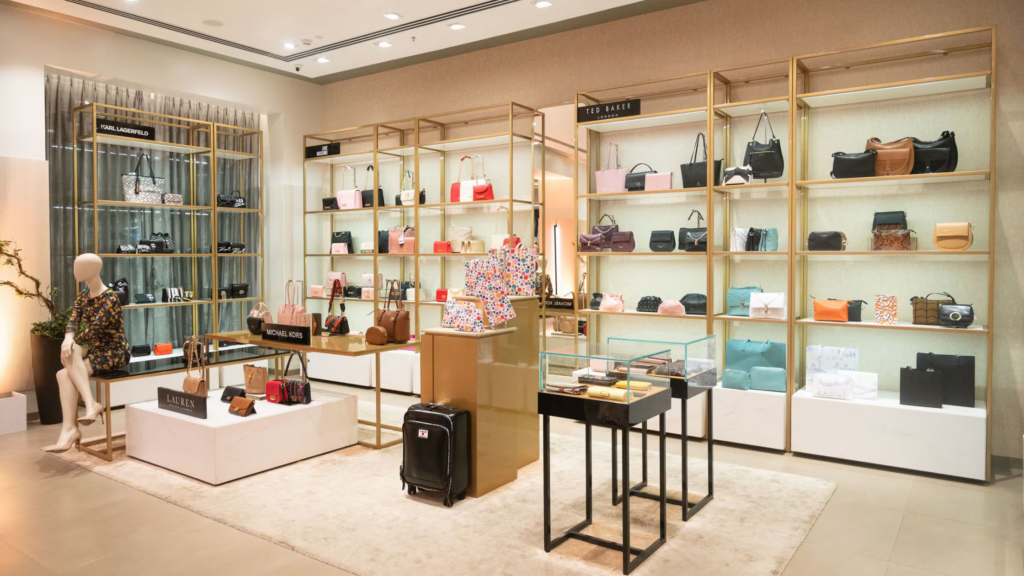
Dwell time is heavily influenced by how intuitive a store feels.
When customers enter a space and immediately understand how to move through it, they are more likely to:
- Explore additional zones
- Slow down naturally
- Interact with displays
- Stay longer overall
Poor circulation produces the opposite effect.
Customers move quickly toward destination items and exit without meaningful engagement. This often happens in layouts where:
- Pathways feel unclear
- Visual sightlines are blocked
- Product groupings feel disconnected
- Congestion interrupts flow
In these environments, movement becomes transactional instead of exploratory.
Good circulation design creates a controlled rhythm inside the store. It guides customers gradually rather than pushing them directly from entrance to checkout.
How Circulation Design Influences Basket Size
Basket size increases when customers encounter products naturally throughout their journey.
This is why circulation design is directly connected to purchasing behavior.
When movement paths expose customers to complementary categories, impulse zones, and secondary displays, opportunities for unplanned purchases increase.
A customer entering for one product may leave with several—not because of aggressive selling, but because the environment supported discovery.
Retail environments that optimize circulation often achieve:
- Better cross-category exposure
- Increased interaction with secondary displays
- Higher engagement with promotional zones
The result is a larger average transaction value without changing inventory or pricing strategy.
The Most Common Store Circulation Problems
Many retail stores unintentionally create friction through poor movement planning.
One of the most common issues is overcrowding near entrances. Without a proper decompression zone, customers enter directly into product-heavy environments before adjusting to the space.
This reduces engagement with the first areas of the store.
Another issue is inconsistent pathway width. Narrow circulation routes create congestion, especially during peak hours, leading customers to avoid certain zones entirely.
Blocked sightlines are equally problematic. When customers cannot visually understand where spaces lead, exploration decreases. They become less likely to move deeper into the environment.
Dead-end layouts create another challenge. Customers prefer continuous movement. Spaces that force abrupt stops or backtracking interrupt flow and reduce overall engagement.
These issues may seem minor individually, but collectively they reduce both dwell time and basket size significantly.
The Role of Entry Zones in Customer Behavior
The first few seconds inside a store are critical.
Customers need time to adjust to:
- Lighting changes
- Spatial orientation
- Visual information
This is why high-performing retail environments use decompression zones near entrances.
These transitional areas allow customers to slow down naturally before engaging with products. Without them, customers tend to move quickly through the entrance area without processing nearby displays.
This directly affects:
- Product visibility
- Initial engagement
- Movement direction deeper into the store
Effective circulation design considers these psychological transitions carefully.
Sightlines and Visual Movement
Movement in retail is not purely physical—it is visual.
Customers are constantly guided by what they can see ahead of them.
Strong sightlines encourage exploration because they create visual curiosity. When customers can see:
- Depth in the store
- Key focal points
- Activity zones
they are more likely to continue moving.
Poor sightlines reduce engagement. Spaces feel disconnected, and customers lose directional confidence.
This is why circulation design and visual merchandising must work together. Movement paths alone are not enough; the visual environment must continuously pull customers deeper into the space.
Why Circulation Matters Even More in Multi-Branch Retail
For multi-branch retail brands, circulation design becomes a scalability issue.
Inconsistent movement planning across locations creates inconsistent customer experiences.
This affects:
- Brand perception
- Shopping behavior
- Operational efficiency
Standardized circulation strategies help retail chains maintain:
- Predictable customer flow
- Consistent product exposure
- Repeatable purchasing behavior
This becomes particularly important in fast retail rollouts where efficiency and consistency directly impact performance across multiple branches.
Store Circulation as a Performance Strategy
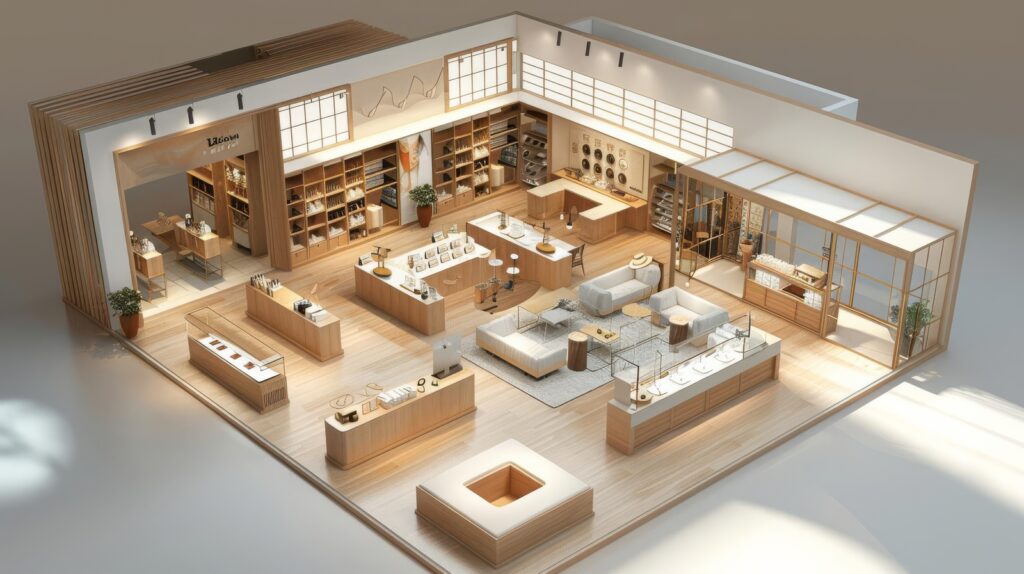
The biggest mistake retailers make is treating circulation as a design detail rather than a business strategy.
In reality, circulation planning influences:
- Revenue per square meter
- Customer engagement
- Queue management
- Product visibility
- Sales opportunities
Well-designed circulation reduces friction while increasing exposure.
This transforms movement itself into a revenue-driving mechanism.
Conclusion
Store circulation design is not simply about helping customers move through a space.
It is about shaping behavior.
Every pathway, sightline, and transition influences:
- How long customers stay
- What they discover
- What they ultimately purchase
When circulation is poorly planned, the store becomes harder to navigate and less engaging to explore.
When circulation is designed strategically, the environment encourages movement, increases exposure, and improves basket size naturally.
In retail environments where every square meter must perform, movement itself becomes one of the most valuable tools for driving revenue.
Retail performance starts with how customers move through your space.
Visit cometarch.com to explore how strategic retail design improves customer flow, dwell time, and sales performance
or connect with our team to discuss your next retail project.