
Biophilic Design and Employee Retention: Real Business Impact
For years, workplace performance discussions focused on technology, operational systems, and management structures. But as companies continue adapting to changing workforce expectations, another factor is becoming impossible to ignore:
The physical environment itself.
More specifically, how the workplace affects the way employees feel, focus, and perform throughout the day.
This is where biophilic design has gained attention—not as a visual trend, but as a workplace strategy connected to employee wellbeing and long-term retention.
Yet many organizations still misunderstand what biophilic design actually means. It is often reduced to adding plants or introducing greenery into the office. While these elements are part of the approach, real biophilic design goes much deeper.
It is about designing environments that reconnect people with natural systems through light, materials, airflow, spatial variation, and sensory balance.
And increasingly, companies are beginning to ask an important question:
Does biophilic design create measurable business impact—or is it simply an aesthetic upgrade?
The answer lies in how workplace environments influence human behavior over time.
The Connection Between Workplace Design and Employee Retention
Employee retention is rarely driven by salary alone.
People stay in environments where they feel supported, comfortable, and able to perform consistently without unnecessary friction. Workplace design influences all three.
Employees spend a significant portion of their daily lives inside office environments. When those environments create fatigue, overstimulation, or discomfort, the impact accumulates gradually. Stress levels rise, focus decreases, and overall engagement begins to decline.
On the other hand, workplaces designed around human wellbeing tend to improve how employees experience their day-to-day routines.
This is where biophilic design becomes relevant—not because it looks calming, but because it actively reduces environmental stressors that contribute to burnout and disengagement.
Research consistently supports this connection. Employees working in environments with natural elements report up to 15% higher wellbeing levels, while stress reduction in biophilic spaces can reach 30% compared to conventional office environments.
These are not decorative improvements. They are operational improvements tied directly to employee experience.
What Biophilic Design Actually Includes
Biophilic design is not defined by a single feature. It is a system of environmental decisions intended to create a more natural and human-centered workplace.
This typically includes:
- Access to natural light
- Visual connection to greenery
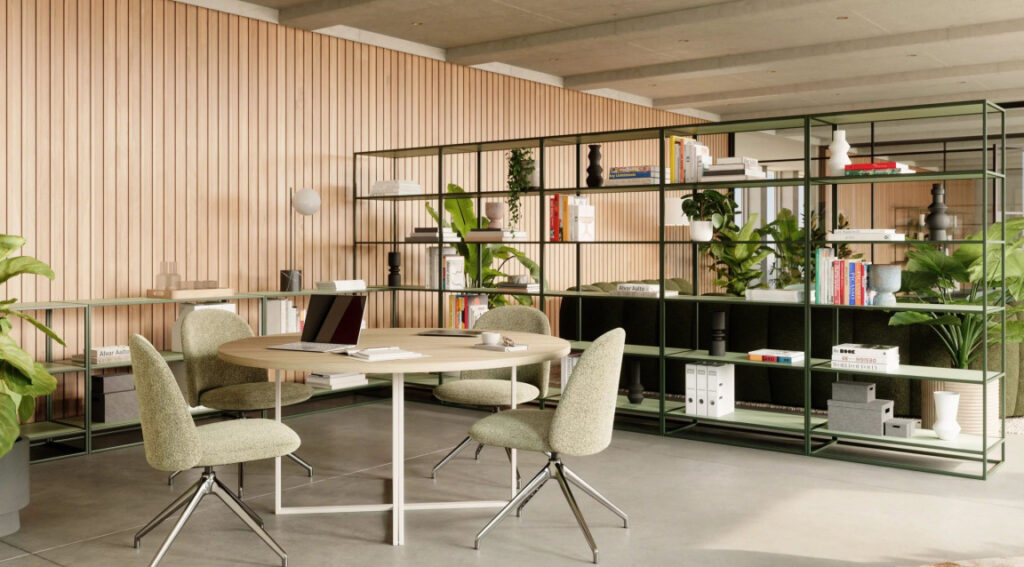
- Natural materials such as wood and stone
- Improved airflow and environmental variation
- Organic textures and softer transitions between spaces
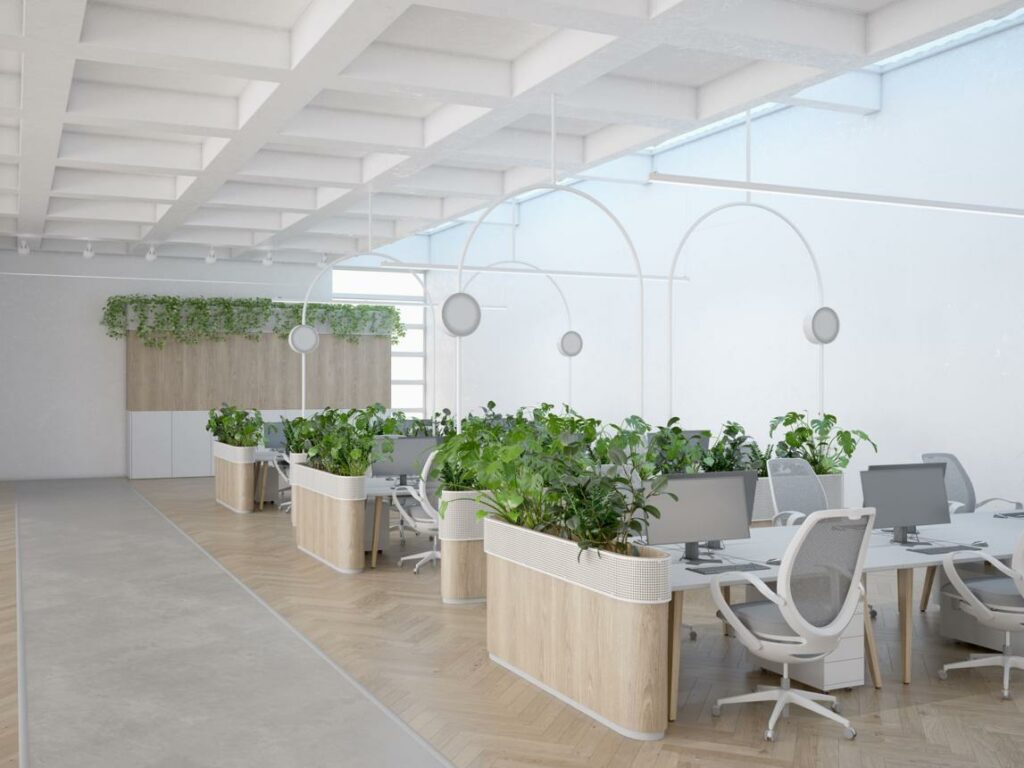
The goal is not to imitate nature literally, but to integrate principles that reduce stress and improve comfort.
When implemented strategically, these elements influence:
- Mood
- Energy levels
- Cognitive performance
- Long-term workplace satisfaction
And over time, these factors contribute to retention.
Why Conventional Offices Often Increase Fatigue
Many offices are designed primarily for density and efficiency. While operational efficiency is important, environments optimized only for utilization often ignore human performance.
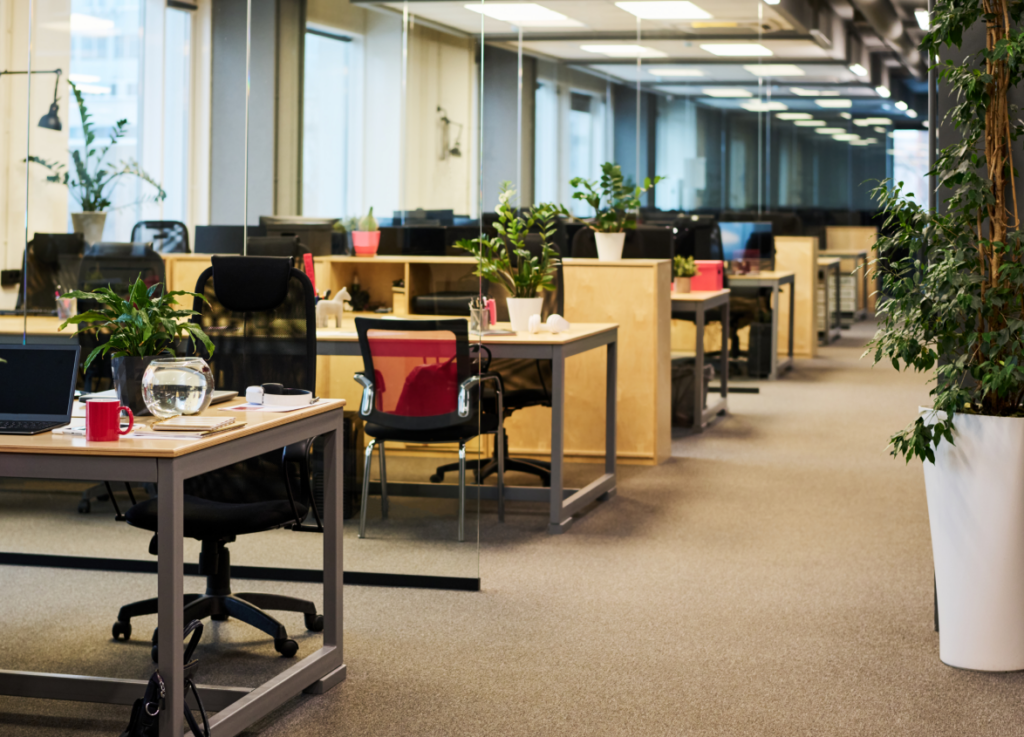
Artificial lighting, repetitive layouts, hard surfaces, and constant sensory exposure create workplaces that feel mentally exhausting over time.
Employees may not immediately identify the environment as the problem, but its effects become visible through:
- Reduced concentration
- Higher stress levels
- Mental fatigue
- Lower engagement
This is particularly relevant in open-plan offices where overstimulation becomes constant.
Biophilic design addresses these issues by introducing environmental balance. Natural light reduces visual strain. Organic materials soften the atmosphere psychologically. Greenery and environmental variation reduce the monotony associated with repetitive corporate environments.
These adjustments may seem subtle individually, but collectively they change how employees experience the workplace every day.
The Productivity Impact of Biophilic Design
One of the strongest business arguments for biophilic design is its effect on performance.
Workplaces that integrate natural light, environmental variation, and biophilic principles have demonstrated productivity improvements ranging from 6% to 16%, depending on the type of work being performed.
This happens because environmental quality directly affects cognitive function.
Studies have shown that employees in workplaces with better daylight exposure and natural integration demonstrate:
- Improved focus
- Faster information processing
- Reduced mental fatigue
- Higher sustained concentration
Some workplace studies even indicate cognitive performance improvements of up to 26% in environments designed around wellbeing and environmental quality.
For knowledge-based industries, these improvements become highly significant. Small increases in focus and mental clarity scale rapidly across teams and operational output.
How Biophilic Design Supports Employee Retention
Retention is often treated as an HR issue, but workplace design plays a larger role than many organizations realize.
Employees are more likely to remain in environments that support:
- Comfort
- Focus
- Psychological wellbeing
- Work-life balance
A stressful environment increases fatigue and disengagement, even when compensation and opportunities remain competitive.
Biophilic design contributes to retention because it improves the quality of daily experience. Employees working in healthier environments often report:
- Higher job satisfaction
- Better emotional balance throughout the day
- Greater connection to the workplace itself
Organizations investing in employee-centered environments have also reported absenteeism reductions of 10% to 15%, alongside measurable improvements in workplace satisfaction.
Retention rarely improves because of one design feature alone. It improves because the overall environment consistently supports employees instead of draining them.
Biophilic Design and Employer Branding
Another overlooked business impact is employer perception.
Modern employees evaluate workplaces differently than they did a decade ago. The office is no longer seen purely as a place to work—it is viewed as part of the overall employee experience.
A workplace that feels cold, overstimulating, or outdated negatively affects how employees perceive the organization itself.
By contrast, biophilic workplaces communicate:
- Care for employee wellbeing
- Long-term thinking
- Modern workplace culture
This becomes particularly important in competitive hiring markets where attracting and retaining talent is increasingly difficult.
The workplace itself becomes part of the company’s positioning.
Why Biophilic Design Fails in Some Offices
Despite its potential, biophilic design is often implemented superficially.
Adding plants without reconsidering lighting, materials, zoning, or environmental quality does not fundamentally change the workplace experience.
This creates a common misconception:
“Biophilic design doesn’t really impact performance.”
In reality, the issue is not the concept—it is the execution.
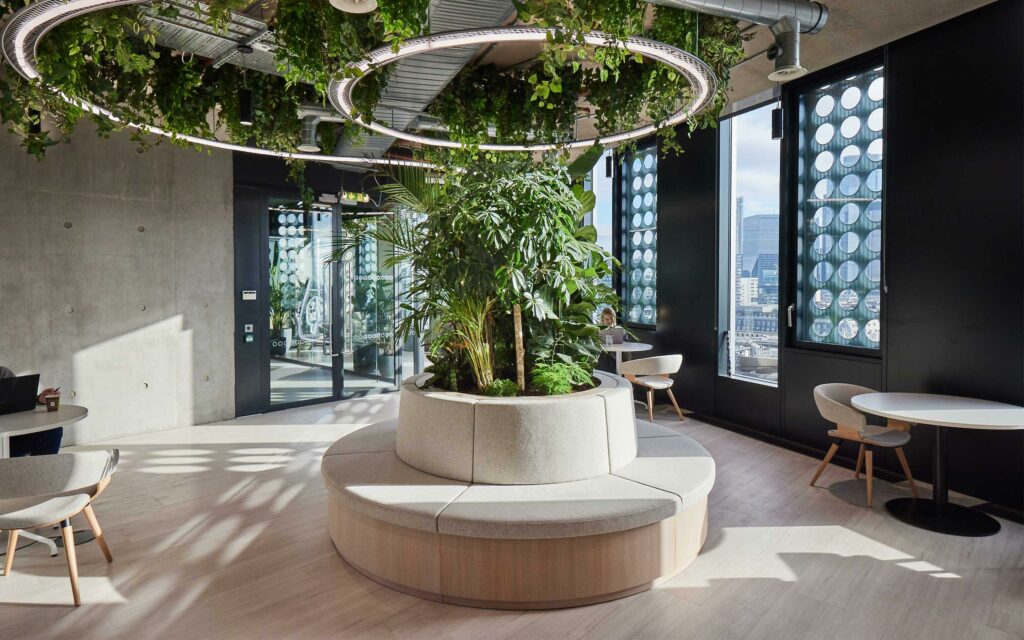
True biophilic design must be integrated into:
- Spatial planning
- Environmental systems
- Material strategy
- Workplace flow
Without this integration, it remains decorative instead of operational.
The Future of Workplace Design Is Human-Centered
As companies continue adapting to hybrid work and changing employee expectations, workplace performance can no longer be separated from employee wellbeing.
Employees now expect environments that:
- Support focus
- Reduce stress
- Improve comfort
- Create balance throughout the workday
Biophilic design aligns directly with this shift because it prioritizes the relationship between people and their environment.
This does not make workplaces less efficient. In many cases, it makes them more effective by improving how people perform within them.
Conclusion
Biophilic design is not simply about aesthetics or greenery.
It is a strategic workplace approach that influences how employees feel, focus, and perform over time.
Its impact becomes measurable through:
- Improved wellbeing
- Reduced stress
- Higher productivity
- Better retention outcomes
When implemented strategically, biophilic design creates environments that support both human performance and business performance simultaneously.
And in today’s workplace landscape, that connection is becoming increasingly important.
Workplace environments directly influence retention, productivity, and employee experience.
Visit cometarch.com to explore how strategic workplace design can support long-term business performance
or connect with our team to create environments built around people, wellbeing, and measurable outcomes