
The Hidden Cost of Poor BOQ in Retail Fit-Out Projects
In retail fit-out projects, delays and budget overruns are often blamed on contractors, procurement issues, or site conditions.
But in many cases, the real problem starts much earlier—inside the documentation itself.
More specifically:
Inside the BOQ.
A Bill of Quantities is frequently treated as an administrative requirement or pricing document. Yet in reality, it is one of the most critical operational tools in any retail fit-out project.
A poorly structured BOQ does not just create confusion during procurement. It affects cost control, execution quality, coordination between stakeholders, and ultimately the speed at which a retail branch becomes operational.
And in high-pressure retail environments—where opening dates directly impact revenue—the consequences become expensive very quickly.
What a Retail Fit-Out BOQ Actually Does
A retail fit-out Bill of Quantities is far more than a quantity sheet.
It defines:
- Scope clarity
- Material specifications
- Execution expectations
- Commercial alignment between parties
In practical terms, the BOQ becomes the reference point for:
- Contractors
- Procurement teams
- Site supervision
- Cost management
- Change control
When this document lacks clarity, every stage after it becomes vulnerable to inconsistency.
This is why high-performing retail projects treat the Bill of Quantities as part of the project strategy—not just a pricing exercise.
Why Poor BOQs Create Problems Before Construction Starts
One of the biggest misconceptions in retail fit-out projects is assuming that problems begin on-site.
In reality, many execution issues originate in documentation gaps long before construction starts.
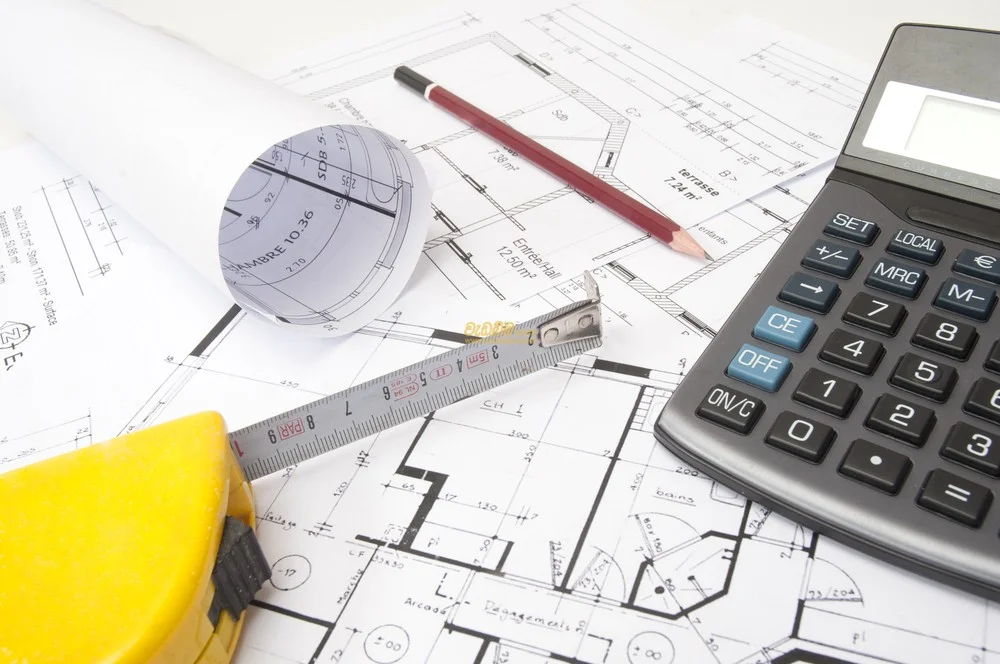
A vague BOQ creates uncertainty around:
- Material quality
- Scope boundaries
- Quantity accuracy
- Installation standards
This uncertainty forces contractors and suppliers to interpret missing details independently. Once interpretation enters the process, alignment disappears.
The result is usually one of two outcomes:
Either:
- Contractors price defensively, increasing costs unnecessarily
Or:
- Contractors underprice incomplete scopes, leading to variation orders later
Both scenarios create financial instability for the project.
The Real Financial Impact of Poor Bill of Quantities
The cost of a weak BOQ rarely appears as one large issue. Instead, it accumulates through multiple smaller problems that compound over time.
These typically include:
- Variation orders
- Procurement delays
- Material inconsistencies
- Rework on-site
- Contractor disputes
Individually, each issue may appear manageable. Collectively, they can significantly affect project performance.
Retail projects with weak documentation frequently experience:
- 10%–20% cost overruns due to unclear scopes and change orders
- Delays in procurement and approvals
- Increased snagging during handover
- Extended opening timelines
For retail brands, delayed openings carry a direct business cost. Every postponed day represents lost operational revenue.
This is why BOQ quality directly affects profitability—not just construction.
How Poor BOQs Affect Procurement
Procurement teams rely on Bill of Quantities to compare contractor pricing fairly.
When documentation is incomplete or inconsistent, comparisons become unreliable.
Different contractors begin pricing different assumptions:
- One includes full installation
- Another excludes accessories
- Another interprets specifications differently
This creates what procurement teams often call:
“Apples-to-oranges quotations.”
At this stage, selecting the lowest bidder becomes risky because the scopes are no longer aligned.
The project may appear financially competitive initially, but hidden exclusions usually emerge later through:
- Claims
- Variations
- Delays
Strong BOQs reduce this risk by standardizing expectations before tendering begins.
The Operational Risk of Unclear Specifications
Retail fit-out projects operate under strict timelines. Most branches are tied to:
- Lease deadlines
- Launch schedules
- Marketing campaigns
- Seasonal openings
When specifications inside the BOQ are unclear, procurement slows down immediately.
Suppliers request clarification. Contractors delay approvals. Material substitutions begin appearing late in the process.
This creates a chain reaction:
- Procurement delays affect execution
- Execution delays affect inspections
- Inspection delays affect handover
In multi-branch retail rollouts, these inefficiencies scale rapidly across locations.
What begins as a documentation issue becomes an operational problem affecting the entire expansion strategy.
Why BOQ Accuracy Matters in Multi-Branch Retail Projects
The importance of Bill of Quantities increases significantly in multi-site retail environments.
When brands are executing multiple branches simultaneously, consistency becomes critical.
Weak documentation creates:
- Different execution standards across locations
- Inconsistent material quality
- Procurement confusion between branches
- Uncontrolled cost variations
A strong BOQ creates repeatability.
It ensures that:
- Specifications remain aligned
- Contractors follow the same standards
- Procurement teams work from consistent references
This consistency improves rollout speed while protecting brand quality across locations.
The Relationship Between BOQ and Change Orders
Change orders are often treated as unavoidable in retail projects.
While some adjustments are expected, excessive variation orders usually indicate one underlying issue:
Poor scope definition.
When BOQ fail to clearly define:
- Materials
- Quantities
- Installation requirements
- Coordination responsibilities
the project becomes dependent on interpretation.
And interpretation creates disputes.
Projects with well-developed documentation generally experience:
- Lower variation frequency
- Faster approval cycles
- Better cost predictability
This improves both financial control and operational stability throughout execution.
How Strong BOQs Improve Retail Project Performance
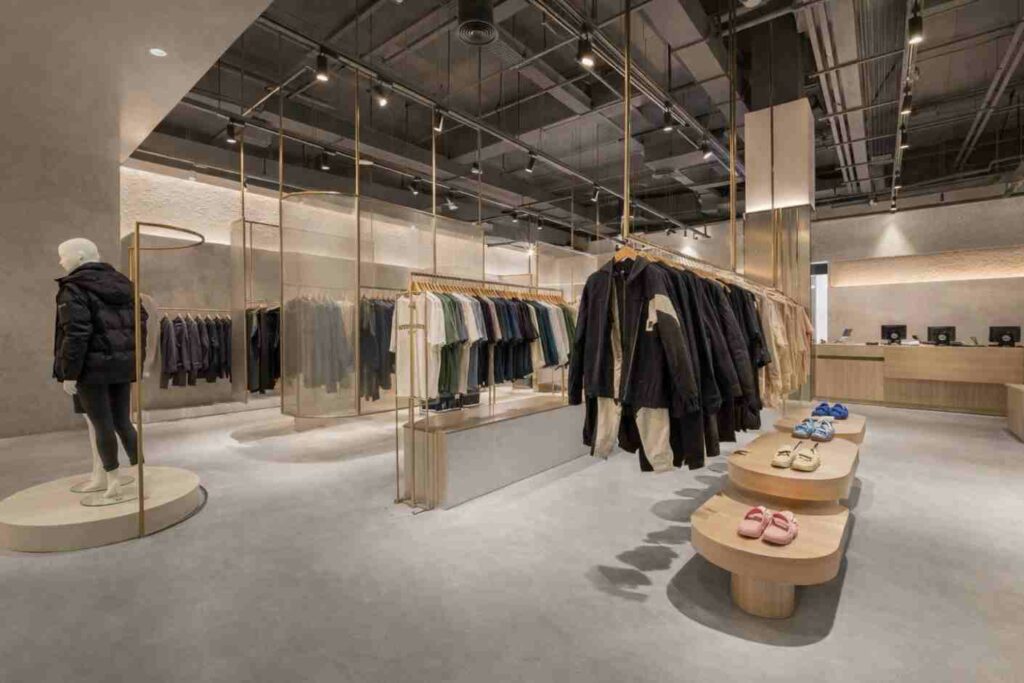
Well-structured Bill of Quantities create value far beyond procurement.
They improve:
- Tender transparency
- Contractor accountability
- Site coordination
- Execution consistency
- Cost predictability
Most importantly, they reduce uncertainty.
In retail projects, uncertainty is expensive because timelines are compressed and operational deadlines are fixed.
A strong BOQ protects the project before construction even begins.
Bill of Quantities as a Governance Tool, Not Just a Quantity Sheet
High-performing retail organizations no longer view BOQ as technical paperwork.
They treat them as governance tools.
This shift changes how documentation is approached:
- Precision becomes operationally critical
- Scope clarity becomes part of risk management
- Documentation quality becomes tied directly to project performance
This is especially important for:
- Retail chains
- Multi-branch rollouts
- Fast-track fit-out projects
Because in these environments, execution speed depends heavily on documentation discipline.
The Long-Term Cost of Weak Documentation
The hidden cost of poor BOQs is not limited to a single project.
Weak documentation creates patterns:
- Repeated delays
- Ongoing procurement conflicts
- Inconsistent rollout quality
- Higher operational risk across future branches
Over time, this reduces the organization’s ability to scale efficiently.
By contrast, strong documentation systems improve:
- Expansion speed
- Cost fidelity
- Brand consistency
- Long-term operational control
This is where BOQ quality becomes a strategic business factor—not just a technical one.
Conclusion
Poor BOQs rarely fail loudly at the beginning of a project.
Instead, they create small inefficiencies that compound throughout procurement, execution, and handover.
What appears initially as missing detail often becomes:
- Budget overruns
- Variation disputes
- Delayed openings
- Inconsistent execution quality
In retail environments where speed, consistency, and operational readiness directly affect revenue, these risks become too expensive to ignore.
The strongest retail fit-out projects are not defined only by good design or strong contractors.
They are defined by documentation that removes uncertainty before execution begins.
Retail fit-out success starts long before construction begins.
Visit cometarch.com to explore how strategic documentation, BOQ precision, and execution planning support faster retail rollouts and better project outcomes
or connect with our team to discuss your next retail fit-out project.