
The Future Workplace Is Not Static: Why Offices Must Adapt to New Work Habits
Future Workplace design is no longer about creating a fixed office layout that serves one way of working. As work habits continue to change, offices must become more adaptive, flexible, and responsive to how people actually use space throughout the day.
For decades, office design followed a relatively predictable formula.
Employees arrived at the workplace each morning, worked primarily from assigned desks, attended scheduled meetings in designated conference rooms, and left at the end of the day. Because work patterns remained largely consistent, office environments were designed around permanence. Spaces were planned to support fixed behaviors, fixed teams, and fixed organizational structures.
Today, that assumption no longer holds true.
The way people work has changed dramatically over the last decade, and those changes continue to accelerate. Hybrid schedules, digital collaboration tools, project-based teams, and evolving employee expectations have transformed how work happens on a daily basis. Yet many organizations continue operating in environments designed for behaviors that no longer exist.
This growing disconnect raises an important question:
Can a workplace designed for yesterday’s habits support tomorrow’s workforce?
For an increasing number of organizations, the answer is no.
The future workplace is not defined by a particular design trend, furniture system, or technology platform. It is defined by adaptability. The most successful workplaces are those capable of evolving alongside the people who use them.
Why Traditional Workplace Models Are Becoming Less Effective
Many office environments were created during a period when work was highly structured and predictable. Departments operated independently, communication followed formal channels, and most tasks were completed from a dedicated workstation.
The modern workplace functions very differently.
Employees now shift continuously between activities throughout the day. A single morning might include focused individual work, virtual collaboration with remote colleagues, informal discussions, project workshops, and client meetings. Each activity requires a different environment.
Research from workplace strategy firms consistently shows that employees spend significantly less time performing a single type of task than they did a decade ago. At the same time, hybrid work models have reduced the relevance of traditional one-desk-per-person planning approaches.
This evolution creates a challenge for static office environments.
When workplaces are designed around fixed assumptions, they struggle to support changing work patterns. Spaces become underutilized, employees adapt workarounds, and productivity begins to suffer—not because people are working less effectively, but because the environment no longer aligns with how work actually happens.
The Future Workplace Is Built Around Flexibility
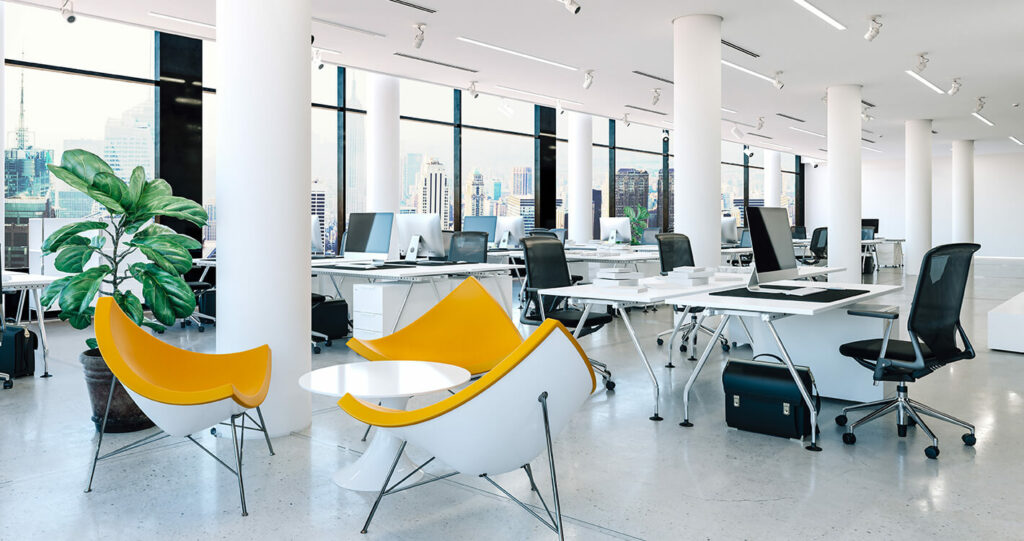
One of the defining characteristics of the future workplace is flexibility.
This does not simply mean movable furniture or open floor plans. It means creating environments capable of supporting multiple work modes without requiring constant redesign.
Employees need access to different types of spaces depending on the task at hand. Focused work requires concentration and minimal distractions. Collaborative activities require interaction and communication. Informal conversations benefit from relaxed environments, while virtual meetings demand acoustic privacy and technological support.
The challenge is that these needs often exist simultaneously within the same organization.
According to workplace utilization studies, up to 60% of employees regularly switch between multiple work modes during a typical day, highlighting the need for environments that can accommodate changing requirements without creating friction.
Organizations that continue allocating most of their space to a single workplace function often experience declining utilization rates and growing employee dissatisfaction.
The future workplace succeeds not because it offers more space, but because it offers the right mix of spaces.
Why Adaptive Workplace Has Become a Business Requirement
Workplace flexibility is often discussed from an employee experience perspective, but its implications extend far beyond comfort and convenience.
Adaptability has become a business requirement.
Organizations operate in environments where growth patterns, team structures, technology platforms, and operational priorities can change rapidly. A workplace designed exclusively around current conditions may become outdated long before its physical lifecycle ends.
This creates both financial and operational challenges.
Workplaces that cannot adapt frequently require:
- Expensive renovations
- Space reconfigurations
- Additional leased areas
- Temporary operational solutions
By contrast, adaptable environments allow organizations to respond more efficiently to changing conditions.
Rather than forcing employees to adjust to rigid environments, flexible workplaces evolve alongside organizational needs.
This approach improves long-term value while reducing the cost of future modifications.
The Rise of Activity-Based Workplace Design
One of the most significant shifts shaping the future workplace is the move toward activity-based planning.
Instead of assigning space according to hierarchy or departmental structure, activity-based workplaces allocate environments according to the tasks employees perform.
This approach recognizes that work is no longer a single activity.
Employees may require:
- Quiet focus areas
- Small collaboration rooms
- Informal meeting zones
- Hybrid conferencing spaces
- Social interaction areas
By providing environments tailored to specific activities, organizations improve both workplace performance and employee experience.
Studies have shown that employees working in environments aligned with their tasks can experience productivity improvements of 10% to 20%, particularly in knowledge-based industries where concentration and collaboration are equally important.
The objective is not to eliminate desks or traditional workspaces. It is to create a more balanced ecosystem that reflects how work actually occurs.
Technology Is Changing Workplace Expectations
The future workplace cannot be discussed without considering technology.
Digital collaboration platforms have fundamentally changed how teams communicate and coordinate. Employees now interact seamlessly across locations, time zones, and organizational boundaries.
This shift affects workplace design in several ways.
First, meeting spaces must support hybrid participation rather than purely physical attendance. A conference room that functions well for in-person discussions may perform poorly when half the participants join remotely.
Second, employees increasingly expect seamless transitions between physical and digital work environments. Workplace technology is no longer viewed as a separate layer—it is part of the overall experience.
Finally, technology enables organizations to understand workplace performance more effectively through utilization data, occupancy analytics, and behavioral insights.
This allows workplace decisions to be based on evidence rather than assumptions.
Why Employee Expectations Are Reshaping Offices
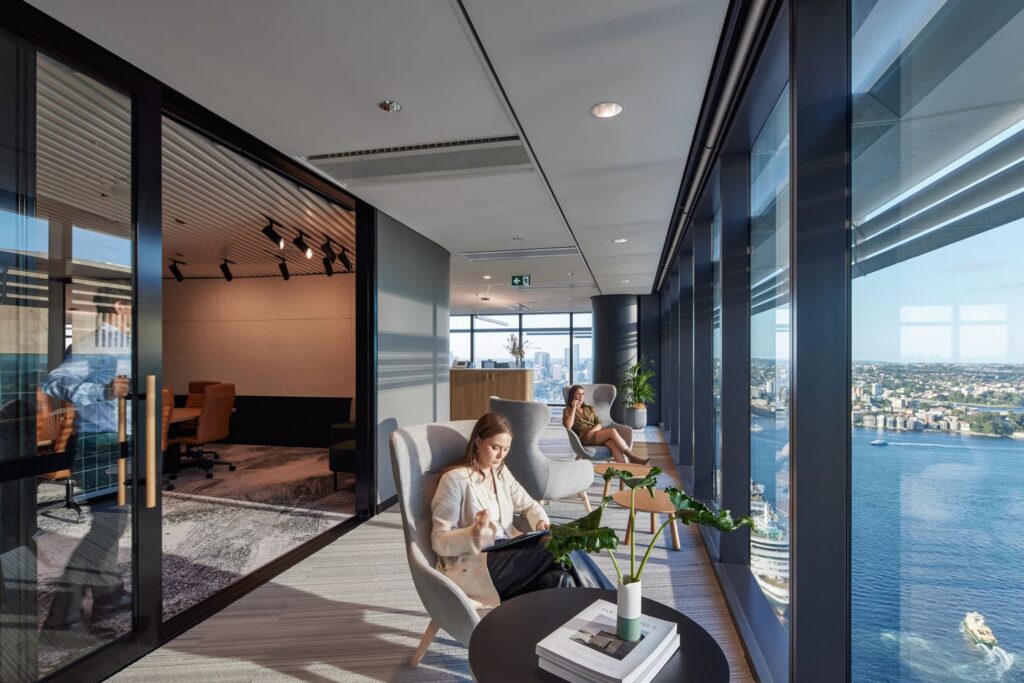
The relationship between employees and workplaces has changed significantly.
In the past, offices were often viewed primarily as places where work happened. Today, employees evaluate workplaces as part of the overall employment experience.
They consider:
- Comfort
- Flexibility
- Access to collaboration
- Wellbeing support
- Environmental quality
Research suggests that workplace experience increasingly influences both employee engagement and retention. Organizations competing for talent can no longer treat the office as a purely operational environment.
The physical workplace has become a strategic asset.
Employees who choose to spend time in the office expect value beyond what they can achieve remotely. This expectation places additional pressure on organizations to create environments that support interaction, innovation, and meaningful experiences.
The Role of Wellbeing in the Future Workplace
Another defining characteristic of the future workplace is the growing emphasis on wellbeing.
Organizations are recognizing that environmental quality directly affects performance. Factors such as natural light, acoustic comfort, air quality, and access to restorative spaces influence how employees feel throughout the day.
Studies have shown that employees with access to natural daylight report better sleep quality, while workplace environments designed around wellbeing principles often experience lower absenteeism and higher satisfaction levels.
This is not simply a wellness initiative.
It is a performance strategy.
Workplaces that support physical and mental wellbeing create conditions where employees can perform consistently over longer periods without experiencing the same levels of fatigue and disengagement associated with poorly designed environments.
The Future Workplace Will Continue to Evolve
Perhaps the most important lesson for organizations is that the future workplace is not a destination.
It is an ongoing process of adaptation.
Work habits will continue changing. Technology will continue evolving. Employee expectations will continue shifting. Organizations that view workplace design as a one-time project may struggle to remain aligned with these developments.
Instead, successful organizations increasingly approach workplace strategy as a continuous process of evaluation and adjustment.
They monitor utilization patterns, gather employee feedback, and refine environments based on real-world performance.
This allows the workplace to remain relevant even as conditions change.
Conclusion
The future workplace is not defined by a particular layout, technology, or design trend. It is defined by its ability to adapt.
As work habits continue evolving, organizations must move beyond static office models and create environments capable of supporting a wider range of activities, expectations, and operational needs.
The workplaces that perform best in the coming years will not necessarily be the newest or most expensive. They will be the ones that remain aligned with how people actually work.
In a business environment shaped by constant change, adaptability is no longer a design preference.
It is a competitive advantage.
The most successful workplaces are designed to evolve alongside the people who use them.
Visit cometarch.com to explore how adaptive workplace strategies can improve performance, flexibility, and employee experience
or connect with our team to discuss the future of your workplace.